Method
How do I make cannabutter?
Butter is the standard because almost every baked recipe is written around it. The one thing worth knowing before you start: butter is only about 80% fat, and the water and milk solids that make up the rest do nothing for you here. That is why adding water to the pot is common advice — it gives the plant material somewhere to dump chlorophyll and keeps the temperature from climbing — and why clarified butter tastes cleaner.
How to make it
- 01
Decarb the flower. Break it up coarsely by hand or with a grinder, spread it in a single even layer on a parchment-lined sheet, and bake at 240 °F for 30–45 minutes.
This converts THCA into THC — without it, most of what you have stays inactive. 240 °F converts 85–95% of what is available. Longer is not safer: past the peak, THC starts turning into CBN and the loss does not come back. Set a timer.
- 02
Melt the butter gently over low heat until it is just liquid.
Just liquid, no hotter. There is nothing to gain from taking it further and terpenes to lose.
- 03
Combine the decarbed flower with the butter at about 28 g per cup.
1 oz flower per cup of fat is the conventional starting point, not a rule. Using half that gives you a gentler infusion, which is often what you actually want.
- 04
Hold it at 160–190 °F for 2–4 hours, stirring occasionally.
This is a long warm soak, not a simmer. Above about 200 °F you start boiling off terpenes and pushing THC toward CBN — if it is bubbling, it is too hot. Sealed, so nothing evaporates off. Also the low-smell option.
- 05
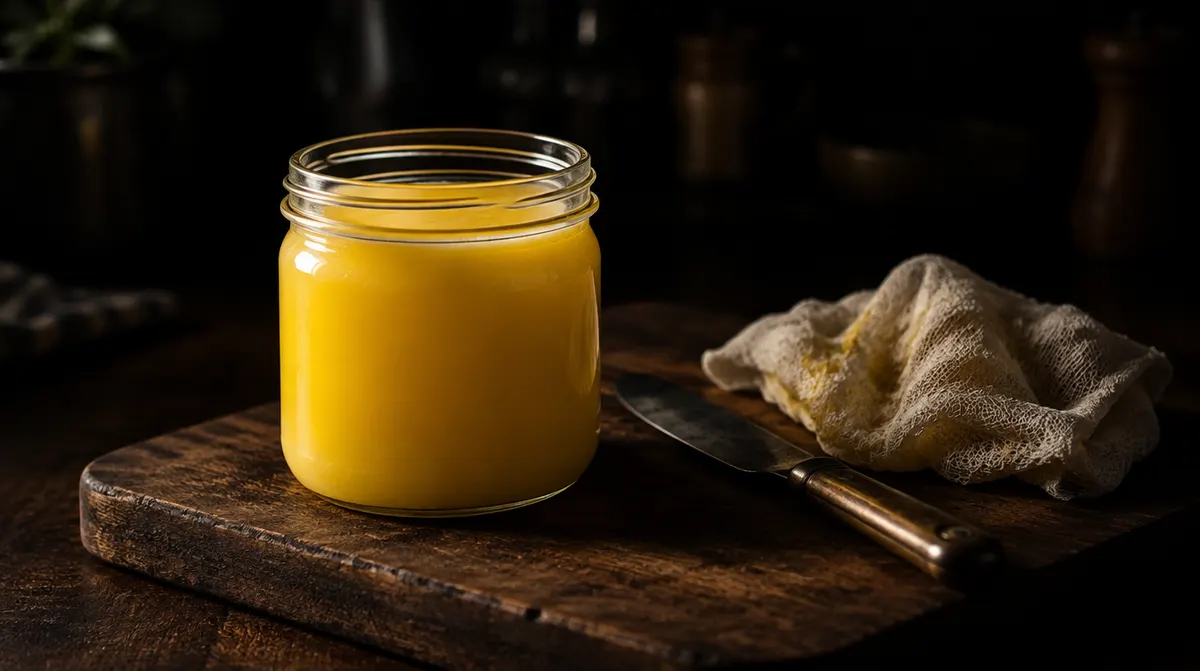
Strain through cheesecloth into a jar. Let it drip on its own — do not squeeze the cloth.
Squeezing forces plant particulate into the butter and is the single biggest cause of a grassy-tasting infusion. What is left in the cloth is not worth what wringing it costs you.
- 06
Cool, then store it cold and dark. Label it with the date and the strength you calculated.
Light, air and heat all degrade it slowly. An unlabeled jar of infused butter in a shared refrigerator is how people get dosed without consenting to it.
Notes on butter
- Adding an equal volume of water to the pot regulates temperature and pulls some of the grassy-tasting water-soluble compounds away from the fat. Chill the finished mixture and the butter lifts off the water as a solid disc.
- Clarifying the butter first — simmering off the water and straining out the milk solids — gives you a cleaner flavor and a more predictable volume, at the cost of an extra half hour.
- Salted butter is fine, but it makes the finished infusion harder to use in recipes that expect unsalted.
How strong will it be?
That depends entirely on your flower, and this page cannot tell you. What it can tell you is the shape of the answer: of the cannabinoid you start with, decarb activates most of it and this method transfers roughly 60–80% of that into the butter.
Put your own numbers in and you get a range in milligrams per tablespoon, with the assumptions printed beside it — then every recipe here rescales itself to match.
Questions people ask
- Why does my cannabutter taste so grassy?
- Usually too much plant material, too much heat, or squeezing the cheesecloth. Chlorophyll and other water-soluble compounds come across when the mixture runs hot, and wringing the cloth forces fine particulate into the butter. Use the water method, keep the temperature down, and let it drip.
- Can I reuse the strained plant material?
- There is very little left in it — that is the whole point of a good infusion. Some people simmer the spent material in milk for a weak drink, but do not expect much.
- How long does cannabutter keep?
- A few weeks in the refrigerator, several months in the freezer. Potency degrades slowly with light, air and heat, so keep it wrapped, cold and dark. Label it — homemade cannabutter looks exactly like butter.